Unpaid Toll Text Scams: How to Tell a Fake Notice From a Real One
Derek’s phone buzzed while he was pouring coffee. A text, no name attached, just a number he didn’t recognize.
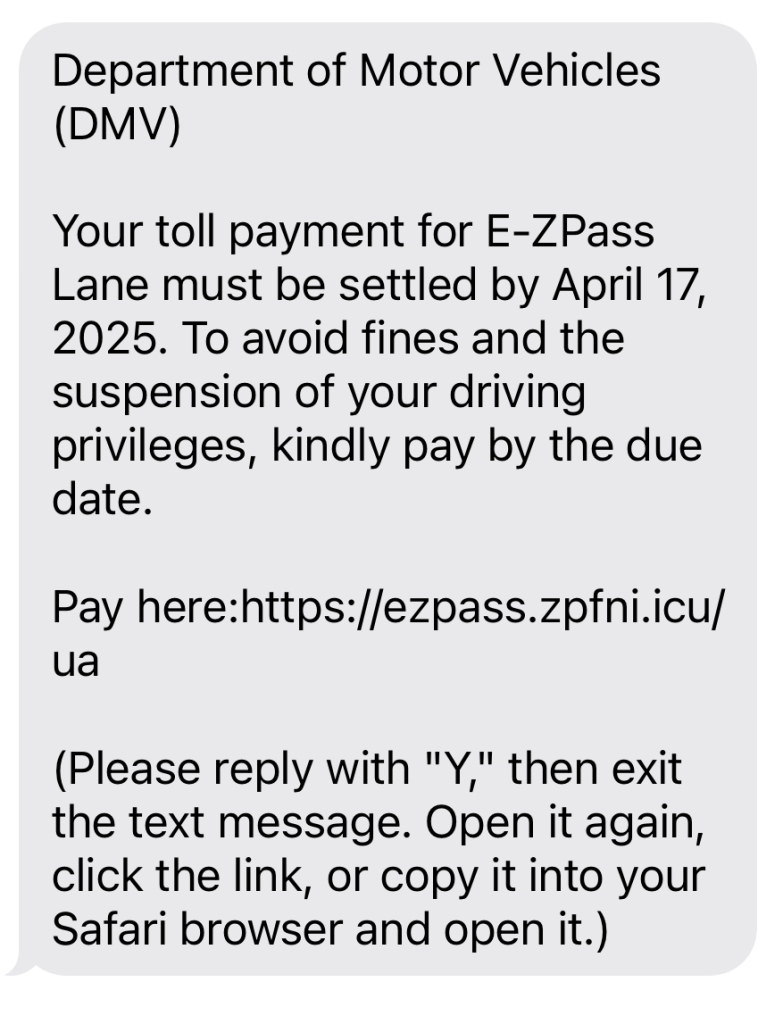
Derek felt his stomach tighten a little. He did have a toll account, an E-ZPass tag from three years ago when he lived in New Jersey. He hadn’t driven through a toll booth in months, but who tracks that closely? The message felt plausible enough that his thumb was halfway to the link before he stopped himself.
He set the phone down and thought about it for a second. The Department of Motor Vehicles? That wasn’t who managed his tolls. His account was with E-ZPass, a separate toll authority, not the DMV. If he genuinely owed toll money, wouldn’t the notice come from E-ZPass itself, not a different agency entirely?
There was something else, too. If E-ZPass really did have an unpaid balance on his account, they already had his information. His name, his plate, his account number. A real notice wouldn’t need him to click a link and start entering payment details like a stranger. It would reference an account they already knew was his.
So instead of tapping the link, Derek opened a browser and typed in the E-ZPass website himself, the same one he’d bookmarked years ago. He logged in. Balance: zero. No pending charges, no flags on the account, nothing.
The text wasn’t from his toll agency at all. It was a stranger who had no idea whether he’d ever driven through a toll booth in his life, betting that enough people who received the message would have some kind of toll account somewhere and would react on instinct rather than checking.
How These Texts Work
This is one of the most common scam text patterns going around right now, and toll agencies across the country, along with the FTC and FBI, have issued repeated warnings about it. The scam counts on two things: that a lot of people genuinely do have toll accounts, and that a specific dollar amount paired with a threat (late fees, registration suspension) creates enough urgency to short-circuit careful thinking.
The good news is that once you know what to look for, these are usually easy to catch. A few signs to watch for:
- The agency name doesn’t match your actual account. If you have an E-ZPass account and the text claims to be from a different program, or from something generic and vague, that mismatch alone is a strong signal.
- A real agency already has your information. If you owe money, a legitimate notice would reference your actual account, not ask you to enter payment details from scratch through a link.
- The link looks slightly off. A misspelled domain, extra words, or a web address that doesn’t match the agency’s real site.
- The greeting is generic. “Dear customer” or no name at all, even though a real account holder would typically be addressed by name.
- The tone pushes urgency and threats. Immediate deadlines, late fees, or vague legal consequences over what’s usually a small amount owed.
Some toll agencies have said publicly that they don’t send texts about overdue balances at all, notices start with mail. That’s worth knowing, but it isn’t something to rely on completely, since practices can vary by agency and could change. Toll operators are well aware this scam exists, and it would be unusual for an agency to notify someone of a fee that could affect their driving privileges through text alone, without any other communication first.
What to Do If You Get One
Don’t click the link. Don’t reply. If you have a toll account, go directly to the agency’s official website or app, the same way you normally would, not through anything in the text, and check your balance there. If you don’t have an account with the agency named in the text, that’s about as clear a sign as it gets.
If you’re ever unsure whether something you’ve received is a scam, gonephishing.org has a step by step guide for figuring out what to do next.